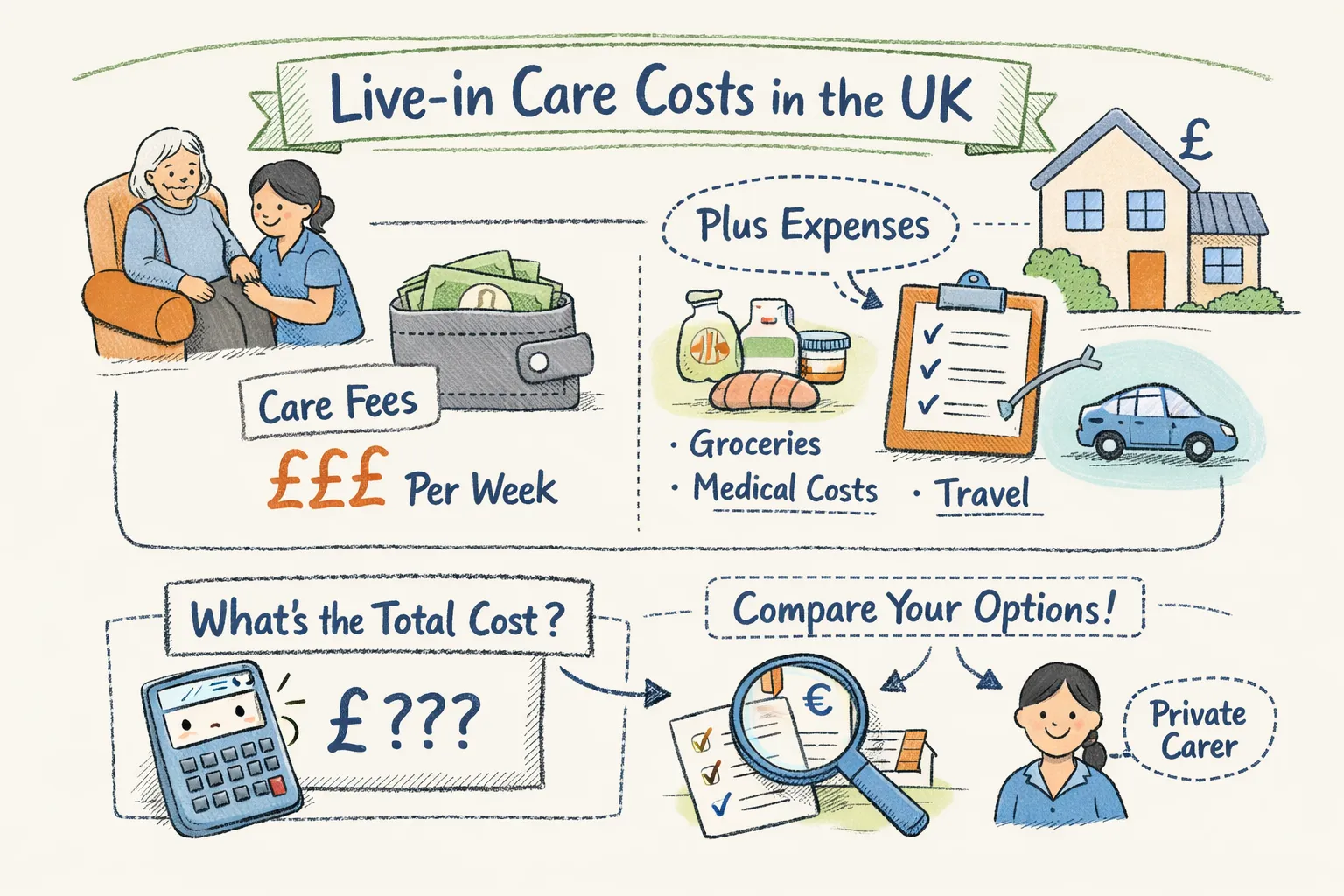
How much does home care cost per hour in the UK in 2026?

Bruno Ceccolini
Co-founder · Care Consultant
Key Takeaways
How much does home care cost per hour in the UK? In 2026, visiting support usually sits between £15 and £38, with many agencies clustering near £32.
The leaflet rate is rarely the weekly bill. Visit length, time of day, and who keeps the fee all change it.
The quote was still in the agency envelope on the kitchen table in Muswell Hill. Ninety minutes, seven mornings. £37 an hour. She had circled the weekly total twice: £388.50. Dad was in the next room with the racing on, which is how he pretends he has not heard.
That is a normal Tuesday. The next firm on the list might still say £28 for the same shower.
How much does home care cost per hour in the UK?
Home care in the UK usually costs between £15 and £38 an hour in 2026. The NHS quotes £15 to £30, depending on where you live and what is needed. Age UK, in guidance updated in February 2026, puts typical homecare around £25. Lottie's 2026 average, from the agencies it works with, is £32 an hour.
Those figures are all in use at once. The NHS band still includes independent carers and quieter postcodes. Agency private quotes sit higher. Inner London morning slots sit higher still.
The Homecare Association's Minimum Price for 2026/27 is £34.42 an hour. That is what they say a firm needs to cover National Living Wage, travel time, mileage, and a bare-minimum office. It is written for councils, not for your kitchen table. From April 2026 the National Living Wage for workers aged 21 and over is £12.71. In 2025/26 the Association put the average council fee around £24.10 to £24.39. Private hourly rates are, in part, how that gap gets filled.
Lottie then works a five-hour week at £32 and gets £160. Honest, that example is almost useless if the job is a shower, breakfast, and getting Dad dressed before you leave for work. Five hours is a drop-in. A morning package is a different product.
Our visiting care cost page uses the band independent carers often publish with us: typically £20 to £25 an hour. London and tightly timed slots go up from there.
What sits inside the hour
The headline rate is the start of the conversation. Ask what a visit actually costs.
A 30-minute call is rarely half of a 60-minute one. The carer still has to get across the borough. Many agencies set a minimum length, often 30 or 60 minutes. Weekends and bank holidays are frequently extra. Two carers for a hoist transfer is two hours billed, not one.
The NHS list of what a paid carer can help with is the same whether you pay £22 or £37: getting up, washing, dressing, the toilet, meals, medicine prompts, shopping, a bit of the house. You are buying time in the home. A GP can advise on the health side. I will not.
If you are comparing quotes, put them on one line: rate, minimum visit, weekend extra, cancellation rule, and whether the same person comes back. How to compare matching services is the longer checklist.
A care worker in Sheffield told the BBC she was worried about the next fuel spike. Four in five homecare workers drive their own cars. The Homecare Association has said 60 per cent of providers still pay mileage at 40p a mile or below, after the tax-free rate moved to 55p.
Two households, two different weeks
The Muswell Hill package was 90 minutes every morning. At £37 that is £55.50 a visit, £388.50 a week, about £20,200 a year before anyone mentions Christmas. Same hours at £25 is £262.50 a week. Same shower. Different overhead.
A son in Moseley, Birmingham, was quoted £28 an hour for two hours, Monday to Friday: lunch, a walk to the shop, and prompting the afternoon tablets. Ten hours at £28 is £280 a week. He did not need evenings. He needed someone who would actually wait while his mother found her coat.
Both were visiting care. Neither needed live-in care. If the day fills up and nights are unsafe, stacking visits gets expensive fast. Domiciliary care versus live-in is the clearer fork.
I cannot tell you which of those two weeks is "enough". A social worker or GP can look at the transfers and the nights.
Who pays for hourly home care
Anyone can ask the council for a care needs assessment. It is free. Savings do not block the assessment. They can change the bill afterwards.
Age UK sets out the England means test. Capital over £23,250 usually means you pay the social-care cost if the council agrees there is a need. Between £14,250 and £23,250 you contribute, including a tariff income. Under £14,250 the council's share is larger, though income still counts. The home you live in is normally left out of that test for care at home. Paying for home care covers self-funding, council help, and top-ups.
The Muswell Hill daughter started paying privately in week two and left the council request in. That overlap is allowed. Keep the invoices distinct.
Attendance Allowance is separate and not means-tested. For 2026/27 the lower rate is £76.70 a week, or £114.60 where help is needed through the day and the night. At £32 an hour, the higher rate covers a bit over three hours. It will not cover seven mornings in Muswell Hill. Claim it anyway.
NHS Continuing Healthcare can fund a package at home with no means test if the integrated care board finds a "primary health need". A fall does not trigger it automatically. Ask a GP or social worker about the checklist.
If they live in Wales or Scotland, use the local council page. The England capital figures above will not map across cleanly.
How Match with Care can help
The envelope on the table is usually an agency rate. Match with Care is a managed introductory care marketplace. We interview carers, check enhanced DBS, right to work, and references, then show you profiles so you can meet someone before they have a key for the 8am slot.
We are not a traditional domiciliary care agency. Introductory matching is not CQC-registered as a care provider, because that is not how introductions work.
What we can do with an hourly package is put a named person against the slots you actually need, often the same carer each weekday, with a care advisor if the match is wrong. Visiting matches often come in around 20 to 30 per cent below typical agency quotes. Carers keep more of the fee, commonly £15 to £20 an hour. Hours go in the app. You get a weekly invoice.
If you want to put a second number next to the one already circled, call +44 7962 657635 or email hello@matchwithcare.com.
Frequently asked
questions
In 2026, visiting home care usually costs between £15 and £38 an hour. The NHS quotes £15 to £30. Age UK puts typical homecare around £25. Agency averages sit nearer £32. London, weekends, bank holidays, and visits under an hour sit higher.
The headline hour is not the same product. Agencies price in travel, unpaid waiting, holiday cover, and office overheads. A 30-minute call often costs more per hour than a 90-minute one because the carer still has to get there. Inner London mornings cost more than a midweek afternoon in the Midlands.
Ask the council for a free care needs assessment first. In England, capital over £23,250 usually means you pay the social-care cost yourself. The home you live in is normally left out of that test for care at home. Attendance Allowance is not means-tested: £76.70 a week, or £114.60 if help is needed day and night.
For a few hours a day, yes. At £32 an hour, two hours every day is about £448 a week. That is still well below typical residential fees. Once you need someone in the house most of the day and overnight, live-in care or a home can be the clearer comparison, because stacking hourly visits gets expensive fast.
Usually no. Many agencies set a minimum call, often 30 or 60 minutes, and still have to cover travel between houses. A short slot can look cheap until you see the hourly equivalent. Ask for the rate, the minimum length, and whether weekends are extra, in writing, before you compare quotes.
Sources
5 sourcesNHS
View source“Help at home from a paid carer”
2024
Age UK
View source“Paying for care at home”
2026
Homecare Association
View source“Minimum Price for Homecare 2026/2027”
2026
Lottie
View source“Home Care Costs | How Much Is Home Care In 2026?”
2026
GOV.UK
View source“Attendance Allowance: overview”
2026