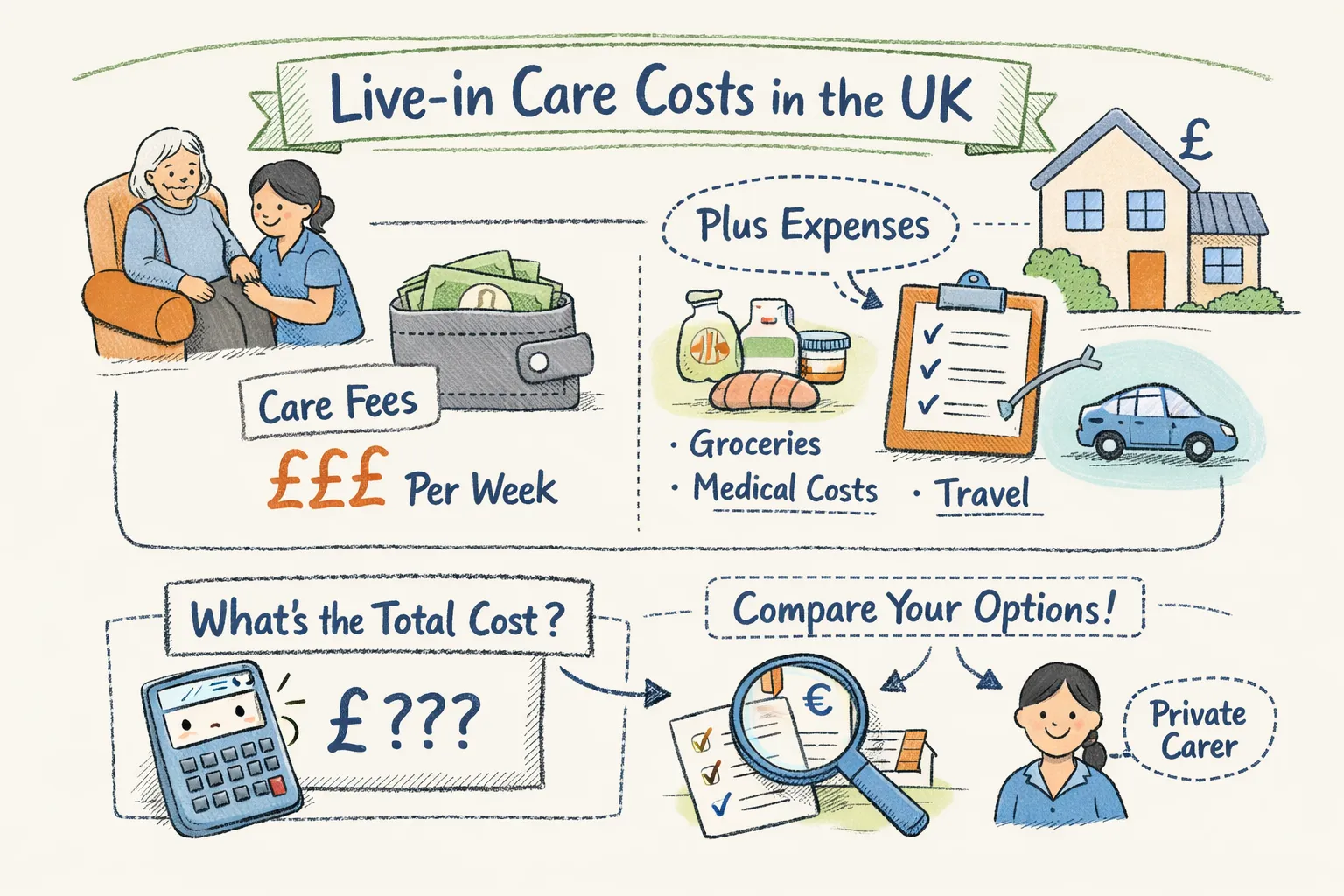
How Much Does Live-in Care Really Cost in the UK in 2026?

Bruno Ceccolini
Co-founder · Care Consultant · Updated 24 September 2026
Key Takeaways
- In 2026, most UK families see live-in care quotes from roughly £900 to £2,000 per week depending on needs and the provider model.
- The national average is around £1,540 per week, but your real cost depends most on care complexity, location, and whether you use an agency or hire directly.
- Before self-funding everything, check local authority assessments and NHS Continuing Healthcare eligibility, as funding can reduce or cover costs in some cases.
If you're asking how much does live-in care cost in the UK, start with the current weekly rates on that guide (£1,050–£1,400 for a typical live-in carer). This article explains why quotes then spread from £900 to £2,000 a week, and what drives the gap.
In 2026, the national average for live-in care sits at approximately £1,540 per week, or around £220 per day — broadly in line with homecare.co.uk's live-in care guidance, which quotes £900–£1,400 per week for standard packages and more for complex needs. That figure is a useful starting point, but what your family actually pays depends on care complexity, location, whether you go through an agency, and which funding options you pursue. This article breaks all of that down so you can estimate a realistic figure for your situation, understand what drives prices, and make a sharper comparison between live-in care and a residential care home.
If you're still weighing the bigger decision, you may also want to read our deeper comparisons on live-in care vs a care home in 2026. For couples, a single live-in package is often cheaper than two care home fees — carehome.co.uk puts residential care at roughly £1,200–£1,700 per week per person in many areas.
How much does live-in care cost per week in the UK right now
The national average of £1,540 per week represents a self-funded, private arrangement for a single individual with standard care needs. Across the market, the realistic range runs from around £800 per week at the lower end for straightforward cases in areas with good carer availability, up to £2,000 per week or more for complex, specialist support. Most families end up somewhere between £1,200 and £1,500 per week once their specific needs and location are factored in.
Translating those weekly figures into a monthly or annual budget changes how the number feels. At £1,540 per week, a family is looking at approximately £6,160 per month or just over £80,000 per year. For couples sharing a single live-in carer, the rate typically rises to £1,600 to £1,900 per week, with some sources reporting up to £2,200, reflecting the additional demands of supporting two people. That sounds like a significant jump, but it remains substantially cheaper than two separate care placements. One more detail worth flagging: headline rates generally do not include carer holiday cover, specialist equipment, or the household costs of providing a room and meals, which typically add £50 to £100 per week on top of the core rate.
What drives live-in care prices up or down
Care complexity and specialist needs
A live-in carer supporting an older adult who is largely independent and mobile will sit at the lower end of the price range. The moment care involves dementia, Parkinson's, post-stroke recovery, or end-of-life support, costs rise by 20 to 50 percent on average. Specialist training commands a higher rate, complex conditions require greater supervision, and some situations call for rotational or two-carer arrangements that multiply staffing costs significantly.
A standard live-in care rate of £1,300 per week can climb to £1,600 or more when the carer has verified dementia experience and the care involves behavioural support or night monitoring. For families dealing with these needs, that uplift is usually worth every pound. Some studies suggest that continuity of specialist care from a single carer may help reduce hospital admissions and medication errors, benefits that carry both human and financial value, even if the evidence base varies by condition.
Regional differences across the UK
London averages around £1,498 per week, slightly below the national average of £1,540. The North East sits lower at approximately £1,351 per week. Meanwhile, the North West and East Midlands both average around £1,652, driven by local wage expectations rather than any difference in care quality.
The practical implication is that geography is not a simple north-cheaper-south-more-expensive story. Checking rates for your specific region, rather than assuming based on general location, often reveals meaningful differences. Families in Yorkshire or the West Midlands may access highly experienced carers at rates well below what London families pay for equivalent expertise.
Carer experience and qualifications
A carer with a decade of experience and specialist qualifications in dementia or palliative care will charge more than someone newer to the profession. That premium reflects real-world competence that affects outcomes directly.
For families managing straightforward needs, a less experienced carer at a lower rate may be entirely appropriate. For complex conditions, defaulting to the cheapest option often costs more in the long run through reassessments, emergency cover, and avoidable hospital visits.
Live-in care vs. a residential care home: what the numbers actually show
The average weekly cost of a residential care home in the UK in 2026 is approximately £1,298 for standard residential care, rising to around £1,535 for nursing care. On those figures, a care home looks cheaper than the £1,540 live-in care average. That comparison, however, only holds when you look at one person in isolation.
For couples, the calculation shifts completely. A care home charges per person, meaning two people face a combined weekly bill of roughly £2,596 or more. A live-in carer supporting both partners typically costs £1,600 to £1,900 per week in total, because both individuals share one carer and one cost. Beyond the numbers, many families report that live-in care offers one-to-one dedicated support, continuity with a single trusted carer, and the comfort of remaining in a familiar home. The financial and practical case for live-in care is stronger than the headline average suggests, particularly for couples and for people with complex needs who benefit most from consistent specialist attention. For further practical detail on typical care home fees and what they cover, see this guide to care home fees and charges: care home fees.
Funding options worth exploring before you self-fund everything
Local authority means-tested support
The capital thresholds for local authority care funding in England in 2026 remain at their established levels. People with assets below £14,250 who have assessed eligible care needs may qualify for full local authority financial support. Those holding assets between £14,250 and £23,250 fall into a sliding scale, contributing a tariff income of £1 per week for every £250 of capital above the lower threshold. Anyone with assets above £23,250 is expected to self-fund. For home care specifically, local authorities retain discretion to apply higher thresholds than the standard residential care limits, so it is worth asking your local authority directly rather than assuming the residential rules apply automatically. Practical guidance on how home care funding works in England is available here: home care funding in England.
NHS Continuing Healthcare
NHS Continuing Healthcare (CHC) is a fully funded package of care for people with a primary health need, assessed entirely independently of financial means. Eligibility depends on the nature, complexity, intensity, and unpredictability of the person's needs, assessed by a multi-disciplinary team through the local Integrated Care Board. When CHC is granted, it covers the full cost of care, including live-in care delivered at home. The critical point: this funding is rarely offered proactively. Families should ask their GP or local ICB directly to initiate a CHC assessment rather than waiting for it to be suggested. For official guidance on eligibility and how CHC works, see the NHS continuing healthcare overview.
Direct payments and personal budgets
People eligible for local authority care funding can choose to receive that money as a direct payment, giving them full control over how it is spent. This includes hiring a private carer of their own choosing rather than accepting a council-arranged service. The same principle applies to personal health budgets under NHS CHC. For families who want to use a matching platform to select their own vetted carer while still drawing on public funding, this route gives you public funding without surrendering the choice of who provides the care.
If you're building a full plan to pay for care, see our guide on how to pay for home care in the UK, plus Attendance Allowance and Carer’s Allowance in 2026.
How to find affordable live-in care without paying the agency premium
Why agency fees add up faster than most families realise
Traditional care agencies provide genuine value: they manage compliance, insurance, payroll, and replacement cover. These are not arbitrary costs. But they do add a substantial weekly markup above the carer's actual rate, industry estimates suggest this overhead can run to several hundred pounds per week depending on the agency and service level. The carer receives their agreed wage; the difference covers the agency's operating costs. For families who need or prefer the fully managed service, that cost can be justified. For those who want more control and transparency, it is worth understanding what other options exist.
Direct hire: the real trade-offs
Hiring a carer directly removes the agency layer and can reduce weekly costs meaningfully. The trade-off is that you become the employer of record, responsible for payroll, National Insurance contributions, DBS checks, liability insurance, and sourcing emergency cover when your carer is unwell. For families with the administrative capacity and confidence to manage this, direct hire works well. For many others, the legal and logistical burden creates a different kind of cost: time, stress, and real compliance exposure.
If you’re still deciding what kind of support you actually need day to day, this comparison can help clarify the difference: domiciliary care vs live-in care.
Where Match With Care changes the equation
Match With Care is designed for families who want a vetted carer without the opacity and premium of a traditional agency. The platform lets you browse profiles of live-in carers across the UK, compare rates directly, and make contact without a traditional agency markup. According to Match With Care, every carer on the platform is interviewed and DBS-checked before listing, which means the background-check process that agencies use to justify their premium is built into the marketplace model from the start.
For families managing specialist needs, you can filter by carers with verified dementia, Parkinson's, or palliative care experience. For those using direct payments or personal budgets, the model aligns well with self-directed care: you retain control of who you hire and what you pay. The platform's approach is to combine the cost transparency of a direct-hire arrangement with a structured vetting process, a practical middle ground for families who want choice without taking on the full administrative burden of independent employment.
The bottom line on live-in care costs
Understanding how much live-in care costs means looking beyond a single headline figure. The national average of £1,540 per week is a reasonable benchmark, but your actual figure will depend on care complexity, location, and how you arrange care. For standard needs, expect to sit between £1,200 and £1,500 per week. For specialist or complex care, budget for the higher end of the range or above. Couples sharing a carer typically pay a modest premium over the single-person rate while still saving substantially compared to two separate care home placements.
Before committing to full self-funding, it is worth pursuing a local authority needs assessment and asking specifically about NHS Continuing Healthcare eligibility. Both routes can reduce or eliminate the cost entirely depending on the person's needs and financial position. Neither is guaranteed, but both are worth the effort to explore. If timing is urgent (for example after a hospital stay), follow our hospital discharge home care step-by-step guide.
When you are ready to get real figures for your specific situation, browse carer profiles on Match With Care. You will see transparent weekly rates, detailed carer backgrounds, and specialist qualifications all in one place. How much live-in care costs in practice depends on the choices you make, and having clear, comparable information from the start means quality care and a workable budget do not have to be in conflict.
Frequently asked
questions
Many sources put the UK average at roughly £1,540 per week in 2026, but real pricing varies widely by care needs, location, and the provider model.
The biggest drivers are care complexity (especially dementia, night needs, or specialist conditions), the local carer market, and whether agency overheads are included in the weekly rate.
For one person, a care home can look cheaper on headline weekly cost. For couples, live-in care is often significantly cheaper because one arrangement can support both people, while care homes charge per person.
Potentially, yes. If CHC is awarded, it can fund a full package of care at home, including live-in care, but eligibility depends on a primary health need assessment.
Sources
6 sourcescarehome.co.uk
View source“Care home fees and charges”
2026
homecare.co.uk
View source“Home care funding in England”
2026
homecare.co.uk
View source“Live-in care”
2026
NHS
View source“NHS continuing healthcare”
2024
Age UK
View source“Paying for care at home”
2024
NHS
View source“When the council might pay for your social care”
2024