What is a Housekeeper Carer? A Guide for Families

Sunshine Calero
Senior Care Consultant · UK home care editorial · Updated 10 June 2026
Key takeaways
- A housekeeper carer brings together practical help at home and warm, day-to-day companionship—ideal when someone is still largely independent but would thrive with a steadier routine and a friendly presence.
- With a sensible, agreed blend of light housekeeping and support, families often find it easier to stay comfortably at home while day-to-day life feels calmer and more organised.
- The match works best when expectations are talked through openly from the start—your loved one gets consistency, and the carer can focus on what they do best.
As families look for flexible and supportive help at home, the role of a housekeeper carer has become increasingly popular. The NHS describes home care as support that helps people stay independent at home — and a housekeeper carer sits at the lighter end of that spectrum. It offers a balanced combination of domestic support and companionship, helping individuals maintain independence in their own home while enjoying a safer, more comfortable day-to-day routine.
However, it is important to understand what the role is—and what it is not—so the arrangement works well for both the client and the carer over the long term.
homecare.co.uk puts typical home care in England at around £26–£38 per hour for standard visiting support. A housekeeper carer arrangement often sits in a similar band when priced hourly, though families usually agree a fixed weekly package covering housekeeping plus companionship rather than clinical personal care. Most self-funders pay privately when savings sit above the £23,250 council threshold.
What is a housekeeper carer?
A housekeeper carer is a hybrid role that blends general housekeeping duties with typically non-clinical care and companionship. The focus is on supporting daily living, maintaining a clean and organised home, and engaging in friendly social interaction.
The role is designed to help clients remain independent at home, rather than replacing clinical or highly specialised care services.
It is especially suitable for individuals who may need a bit of extra help day to day, but who are still largely independent.
Key duties of a housekeeper carer
The role is intentionally balanced and should not be overly demanding on either the domestic or care side. A sustainable workload matters for the wellbeing of both client and carer, and helps the carer stay consistent—so companionship and practical support do not get squeezed out by an unrealistic task list.
Household duties
Typical housekeeping duties include:
- Cleaning and tidying the home
- Laundry, ironing, and general household organisation
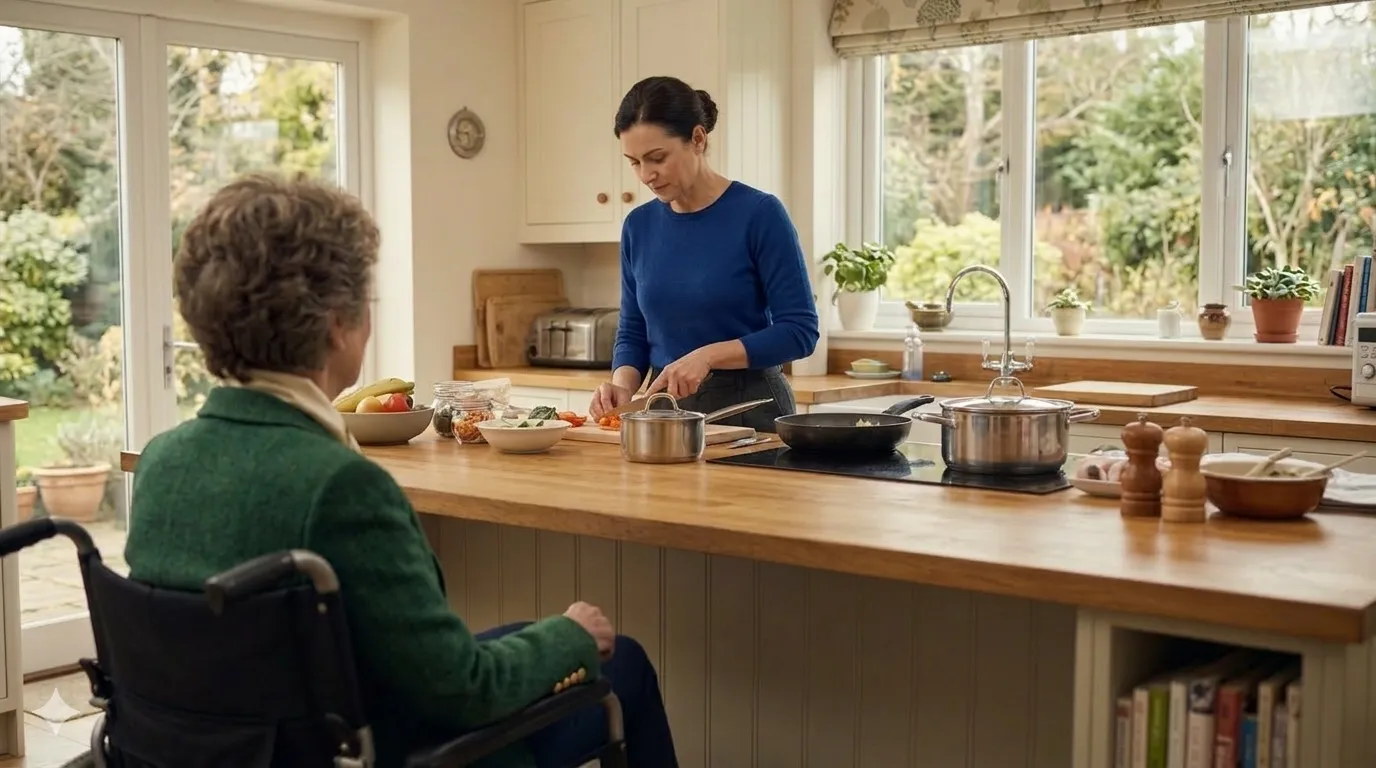
- Meal preparation and basic cooking
- Grocery shopping and household errands
- Keeping living areas safe, comfortable, and presentable
These tasks help maintain a structured, pleasant home environment without turning the position into full-scale domestic management.
Care and companionship duties
On the care side, the emphasis is support, not medical or hands-on specialist care. Duties may include:
- Providing companionship and emotional support
- Encouraging daily routines and structure
- Light assistance with personal care—such as washing, dressing, and mobility—within safe limits and only where the carer is competent to help
- Medication reminders and agreed support with medication (where appropriate, trained, and clearly documented)
- Accompanying clients on walks, appointments, or social activities
- Keeping an eye on safety and comfort, and offering calm reassurance
The focus is supporting independence, not replacing it.
Important boundaries of the role
It is crucial to understand what a housekeeper carer should not typically be expected to do. Setting clear boundaries reduces carer burnout, supports legal and safety compliance, and helps build a positive long-term working relationship.
A housekeeper carer is generally not suitable as the sole answer for:
- Complex care needs and high-intensity behavioural management
- Specialist medical or clinical care
- Full-time, nursing-style responsibilities
If someone needs that level of support, a trained care professional or a specialist care package is usually the safer and more appropriate route.
Why balance matters in this role
One of the most common challenges is role expansion: expectations gradually grow beyond what the position was designed for.
When duties become too care-heavy or too housekeeping-heavy, it can lead to:
- Candidate burnout and high turnover
- Reduced quality of support
- Stress within the household
- Heightened safety risks for both client and carer
Keeping the job scope realistic and documented supports consistency, stability, and a better experience for everyone involved.
Tips for finding the right housekeeper carer
When hiring, look beyond experience alone and focus on suitability for this specific blend of tasks.
Useful considerations include:
- Defining duties clearly, split between care and housekeeping (and writing them down)
- Choosing candidates who understand boundary-led, independence-based support
- Prioritising personality and values fit with the household
- Communicating expectations from day one, including hours, breaks, and what “light” personal care means in your home
A well-matched housekeeper carer should feel like a steady, supportive presence—not an informal substitute nurse or estate manager.
How Match with Care can help
At Match with Care, we focus on thoroughly vetted, background-checked candidates and on matching the right person to the right level of support.
If needs are closer to full personal care or overnight reassurance than housekeeping alone, it helps to compare this role with visiting care or live-in care.
Our introductions are considered carefully, so you are more likely to meet someone reliable, trustworthy, and experienced for the role you actually need.
If you are looking for a housekeeper carer and want a well-matched introduction from the start, get in touch on +44 7962 657635 or email hello@matchwithcare.com. You can also visit matchwithcare.co.uk to browse carers who might suit your family.
Frequently asked
questions
A housekeeper carer combines light housekeeping with companionship and practical support at home. The role may include cooking, cleaning, errands, and gentle prompts, but is not usually full clinical personal care.
It can suit someone who mainly needs help keeping the home running, staying socially connected, and managing daily routines — but does not yet need regular hands-on personal care or overnight supervision.
Do not expect nursing tasks, complex medication management, or specialist dementia behaviour support unless explicitly agreed and within the carer's training. Scope creep is a common source of burnout and mismatch.
If personal care, night-time safety, or frequent supervision is needed, visiting or live-in care is usually more appropriate than a housekeeping-led role.
Sources
5 sourcesNHS
View source“Help at home from a paid carer”
2024
homecare.co.uk
View source“Paying for care at home”
2025
NHS
View source“Getting a care needs assessment”
2024
Alzheimer's Society
View source“Companionship for people affected by dementia”
2024
GOV.UK
View source“DBS checks”
2024