Nutrition for the Elderly: Why Healthy Eating Matters in Later Life

Sunshine Calero
Senior Care Consultant · UK home care editorial
Key Takeaways
- Good nutrition in later life helps maintain strength, balance, recovery and independence.
- Many older adults eat and drink less due to appetite changes, medication side effects, fatigue, mobility issues, or chewing/swallowing difficulties.
- Small, consistent changes, such as regular drinks, protein at each meal, and easier-to-manage snacks, often make the biggest difference.
Good nutrition plays a vital role in maintaining health, independence and wellbeing as we age. But for many older adults, eating well can become harder, especially if appetite is lower, mobility is reduced, or preparing meals feels like too much.
Poor nutrition can affect both physical and mental health, increasing the risk of illness, weakness, falls and hospital admissions. The NHS notes that people aged 65 and over are particularly at risk of malnutrition — often without families realising. NICE quality standard QS24 on nutrition support flags that screening and early intervention matter because weight loss in later life is not always "just ageing". This article explains what changes with age, what to watch for, and how families (and home carers) can support safe, enjoyable eating at home.
Why nutrition often changes with age
As people grow older, the body’s needs change, and so do day-to-day habits. Older adults may experience:
- Reduced appetite
- Changes in taste or smell
- Difficulty chewing or swallowing
- Lower energy levels or fatigue
- Medication side effects (including nausea or dry mouth)
- Reduced mobility (shopping/cooking becomes harder)
- Memory problems (forgetting meals or drinks)
None of these issues automatically mean someone is “not coping”, but they do increase the risk of poor intake over time.
Common risks of poor nutrition in older adults
Malnutrition is more common than many people realise. The NHS advises that older adults need enough protein, vitamins and fluids to maintain strength and recovery, but appetite and routine often get in the way. It can affect physical and emotional wellbeing and may contribute to:
- Unintentional weight loss
- Reduced muscle strength
- Increased risk of falls
- Fatigue and low energy
- Weakened immune system
- Slower recovery from illness or injury
These changes can create a difficult cycle: less strength leads to less activity, which can reduce appetite further and make daily routines harder.
Dehydration: an easy one to miss
Dehydration is another serious concern. Many older adults don’t feel thirsty as often as they used to, so they may unintentionally drink too little.
Even mild dehydration can affect concentration, balance and overall wellbeing. The NHS notes that older people are particularly vulnerable to dehydration, partly because thirst signals weaken with age. It can also contribute to:
- Dizziness
- Constipation
- Urinary infections
- Headaches
- Confusion
Encouraging regular, small drinks throughout the day is often more effective than trying to increase fluid intake all at once.
What does “healthy eating” look like in later life?
A balanced diet in later life is less about perfection and more about maintaining strength, energy and routine.
In practical terms, that often means:
- Protein at each meal (to help maintain muscle mass)
- Fibre (to support digestion)
- A variety of fruit and vegetables
- Whole grains where manageable
- Healthy fats (for energy and overall health)
Consistency matters too. Meals are far more likely to happen when food is enjoyable, familiar, and easy to manage.
When meal preparation becomes the hard part
For many older adults, cooking becomes one of the most difficult daily tasks. Physical limitations (like arthritis) can make chopping and standing painful. Reduced mobility can make shopping difficult. Poor vision, fatigue, or memory problems can lead to skipped meals or reliance on low-nutrition convenience foods.
Practical support at home can make a big difference, helping ensure meals happen regularly, safely, and in a way that respects preferences.
The emotional side of eating
Eating isn’t only about nutrition. It’s also social and emotional.
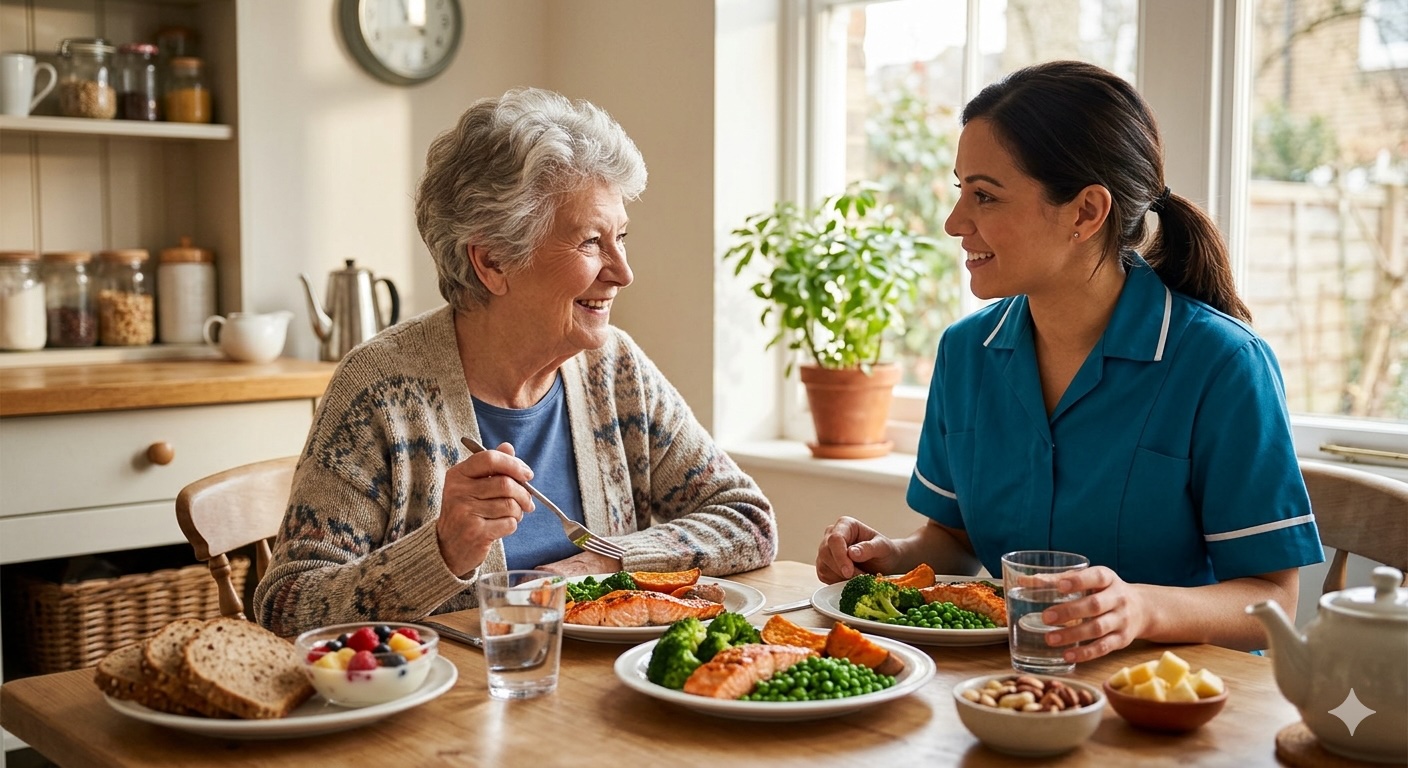
Many older adults living alone lose motivation to cook or eat properly because meals feel lonely. Sharing mealtimes with another person, whether a family member or a carer, often improves appetite and makes daily life feel more structured.
Nutrition and dementia
For people living with dementia, maintaining good nutrition can become more challenging. Someone may forget to eat, lose interest in food, or struggle to recognise hunger and thirst. In other cases, they may find it difficult to prepare meals safely.
Gentle prompts, calm support, and keeping foods familiar can help support regular eating without taking away dignity.
Small changes that often help (without overhauling everything)
Improving nutrition doesn’t always require big dietary changes. Often, small and consistent adjustments are more effective and easier to maintain, such as:
- Offering smaller, more frequent meals
- Providing easy-to-eat snacks between meals
- Encouraging regular hydration (little and often)
- Supporting shopping and meal planning
- Keeping mealtimes consistent
Over time, simple routines can have a noticeable impact on energy levels and wellbeing.
How Match With Care can help
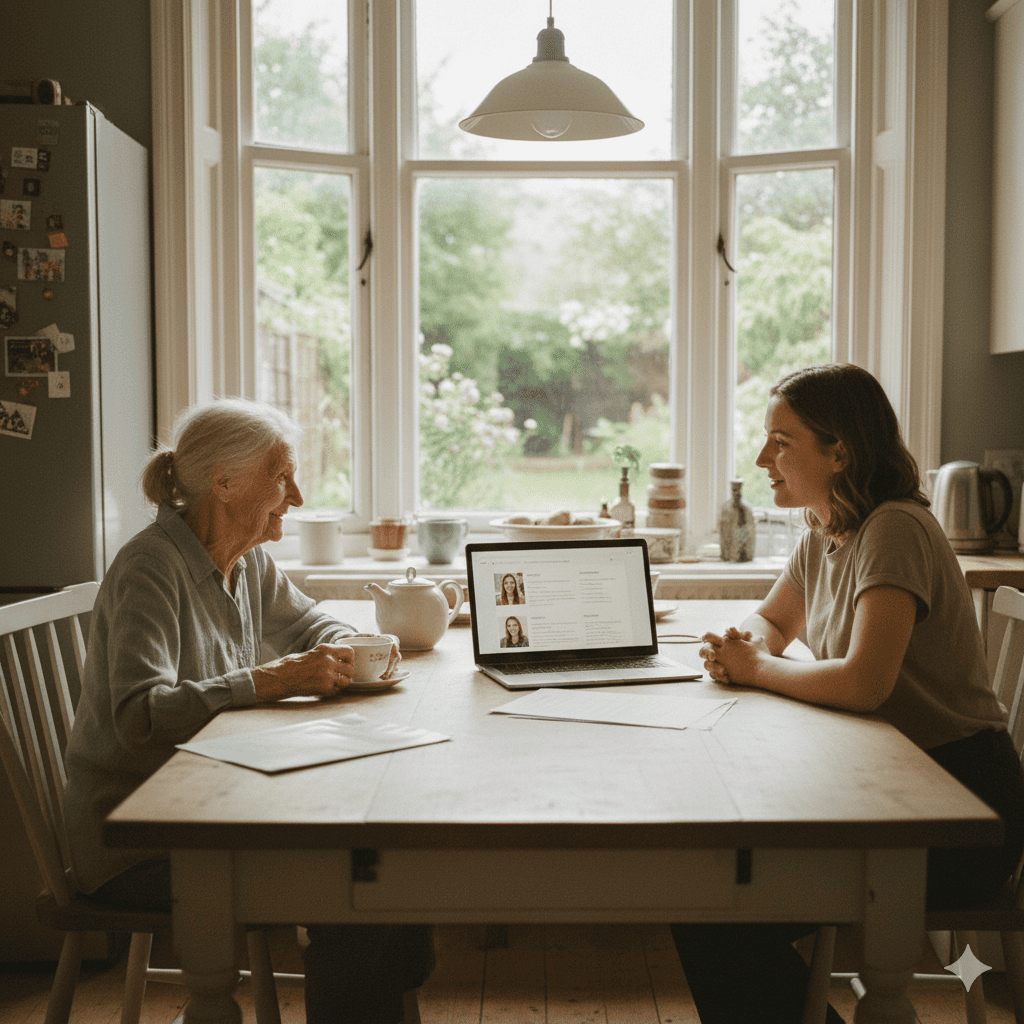
Match With Care is a managed introductory care marketplace. We help families find vetted carers for support at home, including practical help with meal preparation, shopping, hydration reminders and companionship at mealtimes.
We introduce one dedicated carer, so families can build a consistent, long-term relationship rather than dealing with a rotating roster.
Support might include:
- Preparing simple, nutritious meals that match preferences
- Helping plan meals and shop regularly
- Gentle prompts to drink throughout the day
- Creating a calmer, more social mealtime routine
- Tailored support for dementia and other long-term conditions
If you’d like to explore home care options, you can learn more about visiting care and live-in care, or read our guide on what families ask most about home care.
Frequently asked
questions
Common signs include unintentional weight loss, tiredness, low mood, weakness, clothes fitting looser, and a noticeable drop in activity. If you’re worried, it’s sensible to speak with a GP or dietitian.
Thirst cues can reduce with age, and some people may avoid drinking due to toileting concerns. Certain medications can also contribute. Little-and-often drinks are usually the easiest habit to build.
Foods that are soft, familiar and quick can help: soups, stews, eggs, yoghurt, porridge, smoothies, mashed vegetables, and fish. Protein at each meal is often a helpful focus.
Yes. Many carers can help with shopping, meal preparation, hydration reminders and companionship at mealtimes, based on what’s agreed and what feels comfortable for the person at home.
Sources
6 sourcesNHS
View source“Malnutrition”
2024
NHS
View source“Food and diet”
2024
NHS
View source“Dehydration”
2024
NICE
View source“Nutrition support for adults”
2024
NHS
View source“Help at home from a paid carer”
2024
British Dietetic Association
View source“Spotting and treating malnutrition”
2023