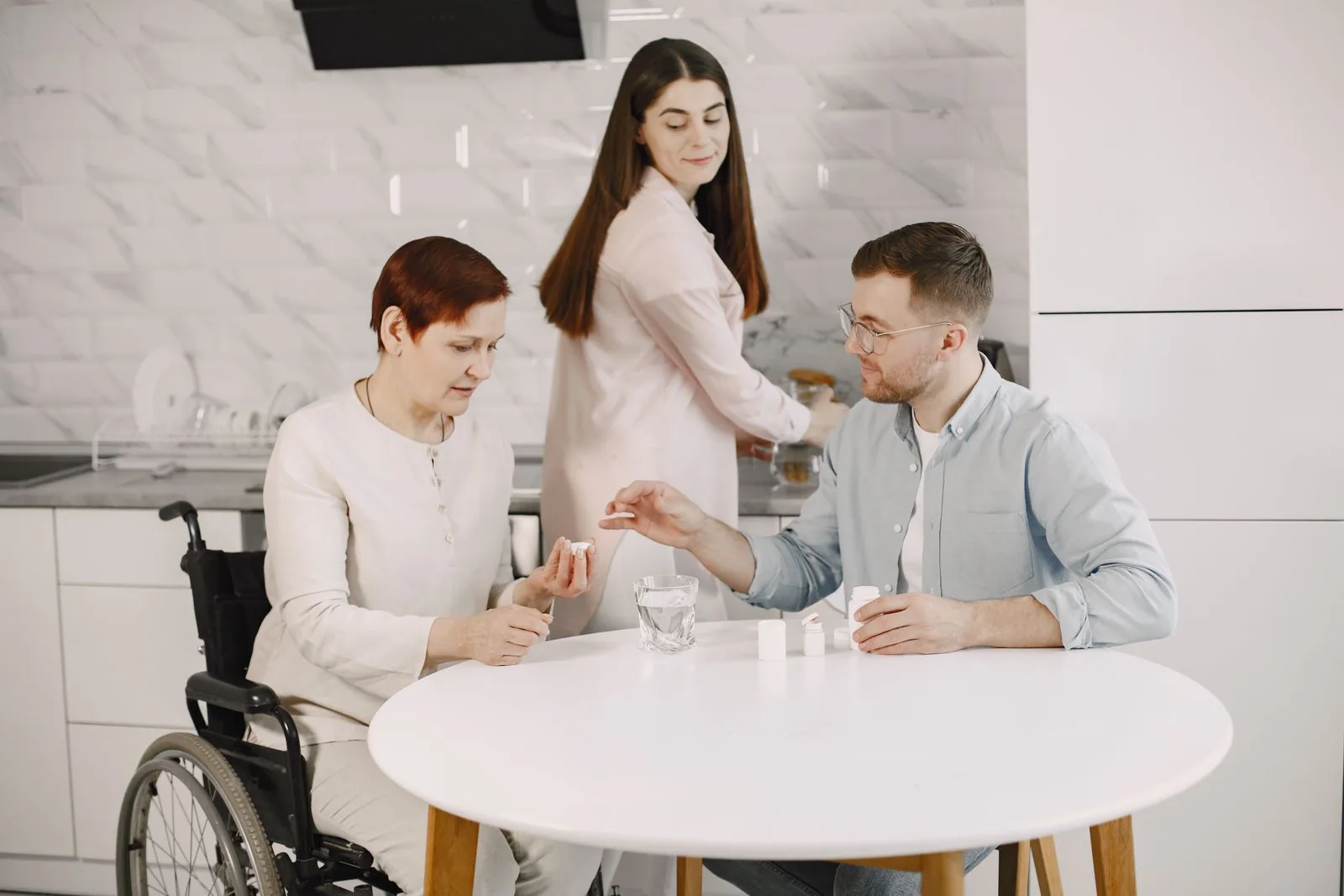
MS care at home in the UK: a practical guide for families

Bruno Ceccolini
Co-founder · Care Consultant
Key Takeaways
MS care at home is paid help in the house they already live in, timed around fatigue, heat, and the jobs that actually wipe someone out. A free council needs assessment does not wait for a perfect diagnosis letter.
The first quote is often a two-hour morning call. Buy the hour when they cannot get off the sofa, not the hour they were already managing.
The afternoon nobody put on the brochure
A partner in Crouch End still takes the Northern line at 7.40. By nine the person with relapsing-remitting MS has made tea. The crash comes after the shower, usually just after one. The first agency quote was 8am to 10am, any weekday. That is a normal homecare window. In that flat it was two hours of sitting in a kitchen that did not need sitting in.
MS care at home is the paid bit: washing, dressing, meals, transfers, continence, a walk to the shops on a good day, prompts for tablets the neurologist has already prescribed. The MS nurse is a different person, on a different number.
NICE guideline NG220 tells clinicians to ask about social care needs and refer to social services, and to offer a single point of contact who actually knows the local MS services. It also tells them to ask, every time, whether fatigue is affecting daily life. Heat, stress, and a long morning can bring that fatigue on. I am not going to tell you how to treat it. That sits with the GP or the MS team.
What is MS care at home?
MS care at home is paid support in the person's own house, from a few visiting hours to live-in cover. A carer follows an agreed plan. They do not diagnose a relapse, and they do not change a dose because swallowing was slow today.
The MS Society's guide to home care includes personal assistants: someone you hire for the hours you choose, who can do personal care, meals, shopping, and getting to appointments. Council-arranged visits are often narrower. Check what the person in front of you will actually do before you sign anything.
Buy the hour that fails, not the hour that looks tidy
If you are writing a plan, put the real clock times on it. "Mornings" is how a 1pm crash gets covered by a carer who left at ten.
In Crouch End they dropped the morning window and booked two hours, 1pm to 3pm, Tuesday and Thursday, same person. She helps with the shower on the days it still happens, puts a meal in reach, and does the laundry the couple had been ignoring since June. The partner still does weekends. They still talk about it as Tuesdays and Thursdays.
A household in Splott, Cardiff, is in a different place. Secondary progressive MS, transfers that now need two people some evenings, a wet room still waiting on a Disabled Facilities Grant. They looked at extra visiting calls and then at live-in care, because the partner cannot keep doing the nights. Sleeping-night cover is not the same as someone awake. If you need the distinction, we already wrote sleeping versus waking nights.
Grab rails and a shower chair should not wait for the big grant. Our home safety guide is the unglamorous list.
Last July I sat in that Crouch End kitchen while two people argued about a £18 tower fan from Argos. One thought it was theatrical. The other had already cancelled a walk to the high street. The fan stayed on. The curtains stayed shut. I am not going to turn the thermostat into a care plan.
If you need a break yourself, respite can be extra visiting hours or a short live-in block. Ask for a carer's assessment from your own council. NICE expects families to be told they have that right.
Who pays for MS care at home
Anyone can ask the council for a care needs assessment. It is free. Savings do not block it. Money comes later, in a financial assessment.
The NHS says help at home from a paid carer often costs £15 to £30 an hour, depending on where you live and what is needed. London sits higher. Tight afternoon slots sit higher still.
In England, capital over £23,250 usually means you pay the full social-care cost if the council agrees there is a need. The home they live in is normally left out of that test for care at home. Wales, Scotland, and Northern Ireland use different charging rules; Scotland does not means-test personal care. How you pay for home care covers direct payments if you want to choose the person yourself.
Working-age people often claim Personal Independence Payment, not Attendance Allowance. If they have reached State Pension age, Attendance Allowance is not means-tested. Neither benefit is a care package. Claim them anyway.
NHS Continuing Healthcare can fund a package at home, with no means test, if the integrated care board finds a "primary health need." The MS Society is blunt: it is not easy to get, and an MS diagnosis does not decide it. Ask the MS nurse or a social worker about a checklist if social care has stopped being enough. Honestly, I find the process slow even when a specialist is pushing it.
The number the first quote never mentions
The MS Society estimates more than 150,000 people in the UK have MS, about one in 400, with nearly 7,100 new diagnoses a year. That is 135 people a week.
My MS My Needs 2022 is the survey I keep coming back to. Among people who needed care and support, 38 per cent had not had adequate help with daily living in the previous year. 61 per cent were getting unpaid hours from family or friends. Of those who named the jobs, 70 per cent needed shopping, cleaning, or laundry, 59 per cent needed meals, 35 per cent needed washing and bathing. More than half of the people receiving unpaid care were getting 20 hours a week or more.
I do not know what the Crouch End package will look like in March. A relapse can add hours. A good spell can look like you over-bought. The MS nurse cannot honestly tell you either. The plan has to be allowed to change.
How Match with Care can help
Once you can name the hours that fail, the next fear is usually who walks through the door.
Match with Care is a managed introductory care marketplace. We interview carers, check enhanced DBS, right to work, and references, then show you profiles so the person with MS can meet someone before anyone has a key. We are not a traditional domiciliary care agency, and we are not CQC-registered as a care provider. Introductory matching does not work that way.
What we can do is keep the first ask small: the Tuesday and Thursday afternoons, or a short live-in trial, with a care advisor if the match is wrong. Visiting matches often come in around 20 to 30 per cent below typical agency quotes, with carers keeping more of the fee.
If you want to talk it through first, without putting a label on the week, call +44 7962 657635 or email hello@matchwithcare.com.
Frequently asked
questions
MS care at home is paid support in the person's own house, from a few visiting hours to live-in cover. A carer can help with washing, dressing, meals, transfers, continence, getting out, and medicine prompts. Diagnosis and treatment stay with the GP, neurologist, or MS nurse. A carer follows an agreed plan and does not change doses.
The NHS says help at home from a paid carer often costs £15 to £30 an hour, depending on location and what is needed. Tight afternoon slots and London hours can sit higher. Sleeping-night and waking-night rates are usually quoted per night, and live-in care is quoted weekly.
Not automatically. NHS Continuing Healthcare in England and Wales is based on whether the person has a primary health need, not on the diagnosis. The MS Society is plain that CHC is not easy to get. Ask an MS nurse, GP, or social worker about a CHC checklist if social care is no longer enough.
A carer can time visits around fatigue, heat, and the tasks that wipe someone out, such as a shower. They can prompt, or where it is agreed and they are trained, help the person take medicines already prescribed. They should not invent a new treatment. Ask the MS nurse what is safe to repeat between appointments, and put that in the care plan.
No. A local authority care needs assessment is free and does not require a perfect diagnosis letter. Practical help at home can start while you wait for neurology. Clinical decisions about medication and relapse treatment still sit with the GP and specialist team.
Sources
5 sourcesMS Society
View source“MS in the UK”
2024
MS Society
View source“My MS My Needs 2022”
2022
NICE
View source“Multiple sclerosis in adults: management”
2022
MS Society
View source“Types of social care”
2023
NHS
View source“Help at home from a paid carer”
2024