Home Safety Tips for the Elderly

Sunshine Calero
Senior Care Consultant · UK home care editorial
Home should feel like the safest place in the world. As mobility, strength, or memory change with age, everyday surroundings can start to present new risks. The NHS notes that around 1 in 3 adults over 65 and half of people over 80 have at least one fall a year — but many accidents can be prevented with small, practical adjustments such as grab rails, non-slip mats, and better lighting.
At Match with Care, we support families across the UK in creating safer homes that still promote independence.
NICE fall-prevention guidance recommends assessing home hazards, strength, and balance together — not treating falls as inevitable with age.
Why home safety matters
Falls are one of the most common causes of injury in older adults. Many happen in familiar environments where risks are easy to overlook — cluttered walkways, loose rugs, or poorly lit stairs. A few simple changes can significantly reduce the chance of accidents and help older adults feel more confident moving around their home.
If you are also thinking about wider changes to the property itself, our guide to future-proofing homes for ageing in place covers adaptations, grants, and professional assessments.
Preventing falls around the home
Reducing trip hazards is one of the most effective ways to improve safety.
- Keep floors clear of clutter and loose cables
- Remove or secure rugs that may slip (non-slip backing or rug tape)
- Improve lighting in hallways, stairs, and the route to the bathroom at night
- Encourage supportive, non-slip footwear indoors
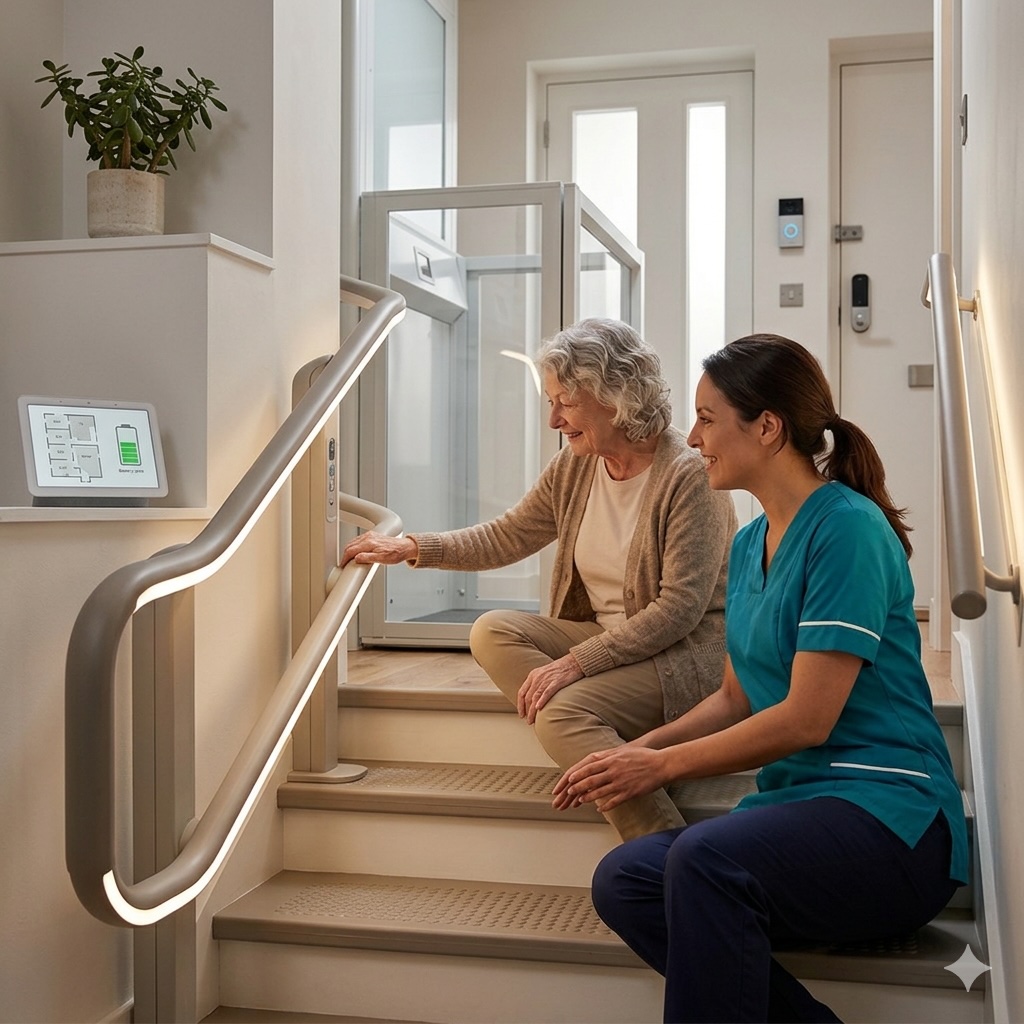
- Make sure handrails on stairs are secure and used consistently
Small adjustments like these can make daily movement much safer and more comfortable. If you have noticed repeated stumbles or a loss of confidence, it may also be time to read about knowing when to find care for your loved one — often safety concerns are the first sign that a little support would help.
Bathroom safety
Bathrooms are one of the highest-risk areas because of wet surfaces and limited space. Helpful changes include:
- Installing grab rails near the shower, bath, or toilet
- Using non-slip mats inside the bath or shower
- Adding a shower chair or bath seat to reduce strain and improve stability
- Keeping toiletries within easy reach so there is less bending or stretching
In some cases, support with bathing from a trusted carer can help maintain safety and dignity without rushing or risking a fall alone.
Medication and daily routines
Medication mistakes can happen more easily with age, especially when multiple prescriptions are involved. Creating a clear routine helps — pill organisers, alarm reminders, or a written chart on the fridge can all reduce confusion.
Having support from a carer for medication prompts (following the GP or pharmacist’s instructions) can also help ensure medicines are taken correctly and consistently. This is not about taking control away from someone; it is about adding a reliable backup when memory or eyesight makes self-management harder.
Kitchen safety
Cooking can become more challenging with reduced mobility or memory changes. Simple precautions can reduce risk:
- Keep frequently used items within easy reach
- Avoid leaving cooking unattended
- Ensure smoke alarms are working and tested regularly
- Turn off appliances after use
- Consider clearer labelling on cupboards if memory is a concern
For some individuals, having support with meal preparation and visiting care adds both safety and reassurance — especially if nutrition or weight has become a worry.
Dementia and increased risk
For people living with dementia, safety needs may be greater. Memory loss or confusion can lead to risks such as leaving appliances on, wandering, or becoming disoriented in the home.
A consistent, calm environment can really help:
- Keep the home layout familiar and avoid moving furniture without explanation
- Reduce clutter so paths stay clear
- Use simple daily routines for meals, medication, and bedtime
- Consider sensor lights or door alerts where appropriate
In some situations, a little extra support is needed to keep things safe — help with meals, medication prompts, or gentle supervision during the day. The aim is always to maintain dignity while reducing risk and providing reassurance for the family.
The role of home care
Professional carers can make a significant difference in home safety by supporting daily routines and spotting risks early. This may include help with mobility, personal care, medication prompts, meals, and companionship — all tailored to the individual’s needs.
At Match with Care, our carers help families create a safer home environment while protecting independence and dignity. Every carer is interviewed, DBS-checked, right-to-work verified, and reference-checked, so you can choose someone you trust to be in your loved one’s home.
If you are comparing types of support, you may find it useful to read what families ask most about home care or explore visiting care and live-in care options.
Your next steps
You do not need to redesign the whole house overnight. Start with the highest-risk areas — stairs, bathroom, and kitchen — and build from there.
- Walk through the home with fresh eyes (or ask a friend or occupational therapist for a second opinion).
- Fix trip hazards and lighting first.
- If safety worries are growing, contact Match with Care for a no-obligation conversation about vetted carers in your area.
Acting early keeps people safer at home and gives families more peace of mind.
Frequently asked
questions
Falls are the most common serious risk, often caused by poor lighting, clutter, loose rugs, or slippery bathrooms. Kitchen burns, medication errors, and confusion related to dementia can also increase risk. Focusing on falls prevention and bathroom safety usually gives the biggest immediate benefit.
Install grab rails, use non-slip mats, consider a shower chair, and improve lighting. Keep towels and toiletries within easy reach. If bathing has become stressful or unsafe, a carer can provide dignified support with washing while reducing fall risk.
Consider care when you notice repeated falls or near-misses, missed medication, weight loss, an unsafe or neglected home, or growing anxiety about leaving your parent alone. You do not need to wait for a hospital admission — earlier support often prevents crises.
No. Many families start with a few hours of visiting care each week for specific tasks such as meals, prompts, and companionship. The goal is to support independence at home for longer, not to take it away.
Our carers support daily routines, notice changes early, and help with practical tasks that reduce risk — from meal preparation to mobility support and companionship. Families choose their own vetted carer and agree rates upfront, with transparent weekly invoicing.
Sources
5 sourcesNHS
View source“Falls prevention”
2024
Age UK
View source“How to make your home safer and more comfortable”
2024
GOV.UK
View source“Disabled Facilities Grant”
2024
Alzheimer's Society
View source“Keeping safe at home”
2024
NICE
View source“Falls in older people”
2024