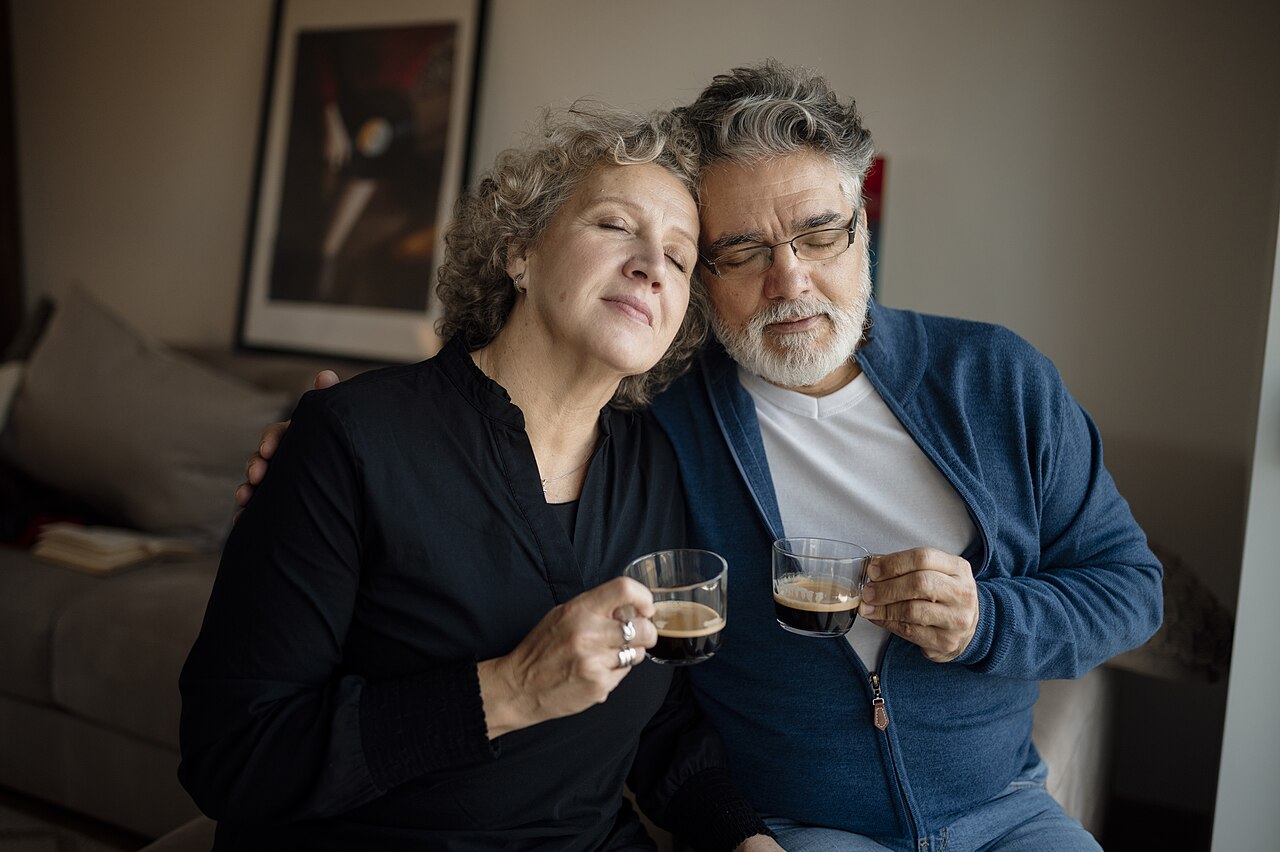
Live-in care for couples in the UK

Bruno Ceccolini
Co-founder · Care Consultant · Updated 27 November 2026
Key Takeaways
Live-in care for couples is one carer in the house you already share, billed as a household week, not two care-home rooms. Introductory matching often sits at £1,250–£1,650 a week. Two residential places at Age UK's 2026 averages start around £2,200. The quote only holds if the nights fit one person who also needs to sleep.
Two nursing-home rooms, on Age UK's national average, are about £2,900 a week. One live-in carer for both of you, on an introductory match, is often £1,250 to £1,650. That is the number families circle. It is also the number that collapses if both of you are up after midnight.
I am starting there because the comparison pages usually bury it under a paragraph about "staying together". The invoice is why adult children actually open the tab.
How live-in care for couples actually works
A paid carer moves into the spare room for a block of weeks, takes a daily break, and covers both of you in the same kitchen. The NHS (last reviewed 18 January 2024) puts visiting homecare at about £15 to £30 an hour and says you might need a live-in carer. Four calls a day for two people, plus a night, is how visiting stops looking cheaper.
The common pattern is uneven. One partner needs washing, dressing, medicines, a frame. The other still makes tea, still knows the boiler, and is exhausted. The carer's week is personal care for one person and the running of the house for both. Live-in care for couples is that model. How families book it is in how to find a live-in carer.
Alzheimer's Society says remaining at home with extra support can work because the place still feels familiar. It also says a full-time carer in the house can confuse some people with dementia, and can change what "home" feels like for whoever else lives there. If one of you has a diagnosis, that sentence belongs in the first conversation with the carer, not week three.
He still hides the Telegraph crossword in the bread bin so she does not finish it before lunch.
When one live-in carer cannot cover a couple
A standard live-in week assumes the carer rests at night and can get up once or twice. Brief waking is normal. Hours of walking the landing, or both of you needing the toilet in the same hour, is a different product. That product is a waking night, a second carer, or a care home with staff on a rota.
Two-person hoisting is the other hard stop. One pair of hands cannot do a hoist that needs two. Your GP or an occupational therapist can advise on equipment. We cannot.
Alzheimer's Society lists the usual turning points for a care-home move: daily tasks no longer possible without another person; repeated falls; the family carer becoming ill; needs changing after hospital; or care at home becoming too hard to manage. For a couple, "the family carer" is often the spouse who is still in the house. Live-in is sometimes the thing that stops that spouse from being the next admission.
I have not sat in your landing at 2am. A diagnosis does not tell me how often that landing light goes on, and I will not pretend it does.
What live-in care for couples costs in 2026
Age UK (updated 3 November 2026) is the page most families open first. Privately arranged care at home around £25 an hour. A residential care home around £1,100 a week. A nursing home around £1,450. Those are averages for one place. Two places are two invoices. London and specialist dementia units sit above them.
Introductory matching, including Match with Care, often quotes £1,250–£1,650 a week for a couple. That is usually £150–£300 above a single-person live-in week. Managed agencies often sit at £1,950–£2,450. The published single-person live-in band is still £1,050–£1,400. Couples sit above the bottom of it. The national spread is on how much live-in care costs.
You still pay the house. Heating, food for three, council tax. A care-home fee includes a room and meals you no longer buy. Count the heating. The generic fork is on live-in care vs care homes. This page is the two-person version.
How couples pay for live-in care
Each of you is assessed as a person, not as a joint pot.
Age UK Factsheet 39 (April 2026) is blunt: the local authority cannot include your partner's capital or income in your financial assessment, and they cannot be charged a contribution towards your care. If one of you does move into a care home, the value of the former home is disregarded for as long as the other partner remains living in it.
If you both stay, Age UK's paying-for-homecare page is the line that matters: unless you are moving into a care home, the means test does not take the value of the property you live in. Capital over £23,250 in England usually means you pay the social-care cost yourself. The house you are trying to keep sharing does not get counted. Start with a free care needs assessment for each of you, even if you expect to pay.
Attendance Allowance is claimed separately. From April 2026 the lower rate is £76.70 a week and the higher rate, for help through day and night, is £114.60. It is not means-tested. Two higher-rate awards are £229.20. That knocks a bit off the standing order. It does not buy the week. How the rest is stacked, including Direct Payments and NHS Continuing Healthcare, is in paying for live-in care.
Short-term is allowed. Some couples book live-in after hospital discharge for a fortnight while one of them recovers, then stop. Ask about a minimum stay before you assume you are locked in.
Two households, same question
Priya's parents are in Muswell Hill, N10. Mum has Parkinson's. Dad still drives to Waitrose and is worn out. A nursing home that would take both of them quoted two rooms. The agency live-in PDF for a couple was £2,100 a week. An introductory match sat around £1,450. The local page is live-in care in London. Nobody in the family has stayed overnight on a weekday to see how often he is up.
A couple in Chorlton, Manchester. She came home after a stroke. He uses a frame and manages his own pills. Two visiting calls a day were missing the night. They asked for a four-week live-in bridge, then a review. I do not know whether that review will say stay, or look at a home.
How Match with Care can help
Match with Care is an introductory care marketplace. We are not CQC-registered as a care provider. Carers on the platform are self-employed. We interview them, run enhanced DBS, right-to-work and reference checks, then you pick from profiles. For a couple, the useful bit is meeting the person who will sleep in the spare room before they move in. Two bedroom doors on a care-home corridor do not give you that.
You get a weekly invoice through the platform. The same hours usually cost 20–30% less than a managed agency, because you are not paying their payroll on top of the carer's rate. The published couples live-in guide band is £1,250–£1,650 a week, including the 10–15% platform fee. Waking nights sit outside that. Ask.
Browse live-in care for couples. A care advisor can talk through a quote, including cover for the weeks off. We cannot tell you what Barnet, Manchester City Council, or your own borough will put in a care plan.
Put the two-room quote and the spare-room quote on the same page. If the cheaper one assumes a sleeping night, ask what happens the week that stops being true.
If you are arranging care, start with London live-in carers, Travel companion care at home, and vetted live-in care.
Frequently asked
questions
Introductory matching often quotes £1,250 to £1,650 a week for one carer supporting both partners, including a 10–15% platform fee. Managed agencies often sit at £1,950 to £2,450. Age UK (updated 3 November 2026) puts a residential care home around £1,100 a week and a nursing home around £1,450, so two rooms are two of those invoices.
Often, when one partner needs most of the personal care and the other needs meals, prompting and a safer house. One carer cannot safely do two-person hoisting, or repeated waking through the night for both people. Write the night assumption into the quote. Ask an occupational therapist or GP about transfers; we do not give medical advice.
Each person claims separately. From April 2026 Attendance Allowance is £76.70 a week at the lower rate, or £114.60 if help is needed through day and night. It is not means-tested. If both qualify at the higher rate that is £229.20, which is a contribution, not the live-in fee.
Usually not. Age UK is clear that unless you are moving into a care home, the council's financial assessment does not take the value of the property you live in. If one partner does move into a care home, Age UK Factsheet 39 says the home is disregarded for as long as the other partner remains living in it. Capital over £23,250 in England still usually means you pay the social-care cost yourself.
Ask for a free care needs assessment for each person. Age UK Factsheet 39 says the local authority must treat you as individuals and cannot charge your partner a contribution towards your care. The council may contribute after a financial assessment. It will not usually cover care at all hours. Get in writing whether a Direct Payment can go to a named self-employed live-in carer.
Sources
5 sourcesAge UK
View source“How much does care cost?”
2026
Age UK
View source“Paying for care in a care home if you have a partner (Factsheet 39)”
2026
GOV.UK
View source“Attendance Allowance: what you'll get”
2026
NHS
View source“Help at home from a paid carer”
2024
Alzheimer's Society
View source“Care options: When is the right time to move someone into care?”
2026