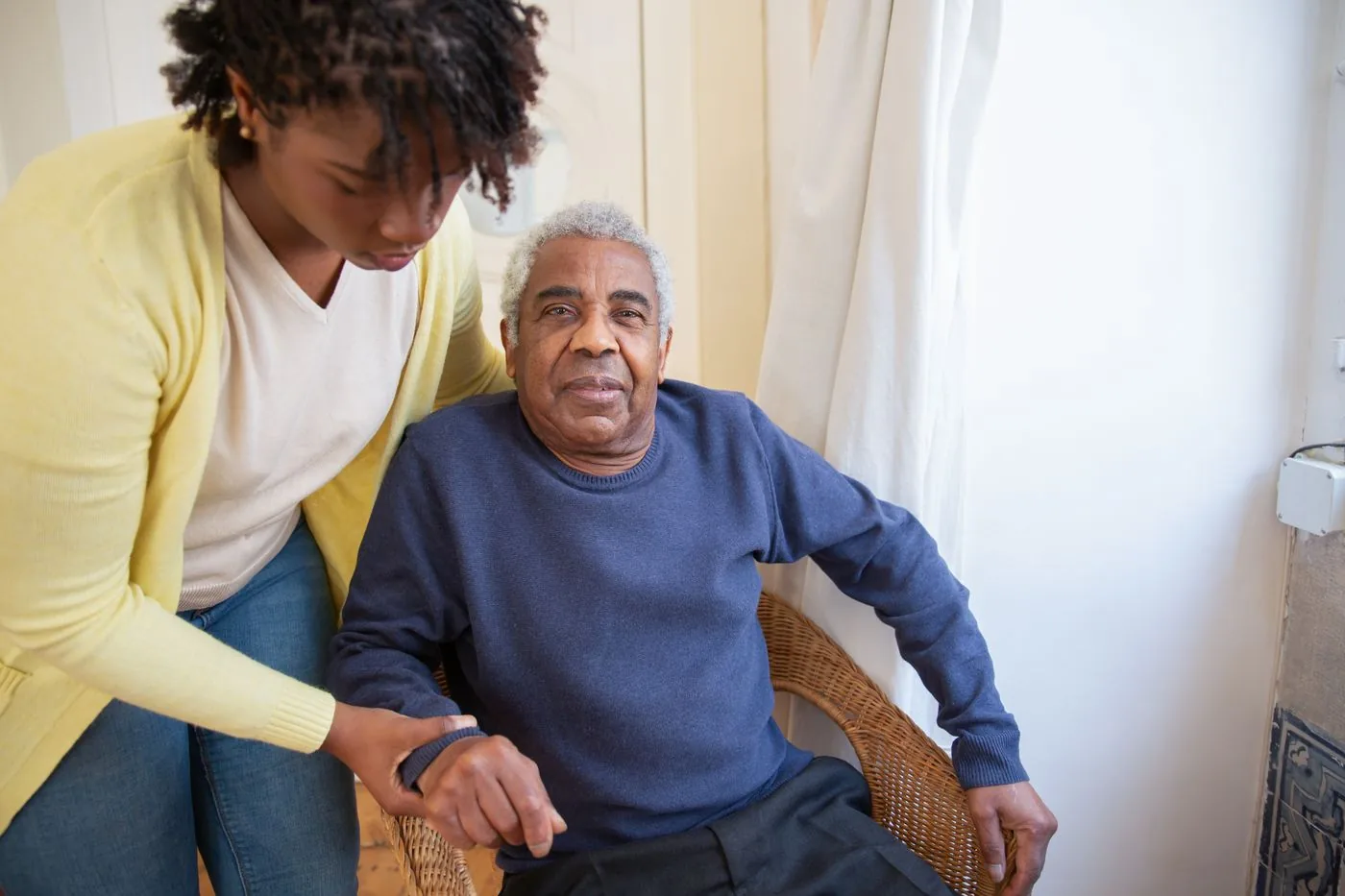
How to talk to an elderly parent about home care

Bruno Ceccolini
Co-founder · Care Consultant · Updated 11 September 2026
Key Takeaways
You can talk to an elderly parent about home care without turning it into a verdict. Start with what you have noticed, keep the first ask small, and treat a free council needs assessment as information, not a trapdoor into a care home.
The Tuesday visits are already happening. Two hours, nine till eleven, in a terraced house off the Uxbridge Road in Ealing. A carer called Amina helps Mum in the shower, puts a wash on, and sits with her while she eats toast. That is the whole arrangement. Getting there took six weeks, one conversation that went badly, and a second that went better.
This is the bit in between: how to talk to an elderly parent about home care in the UK when you can see the gaps and they still say they are fine.
Why this is sitting on your to-do list
Age UK estimates two million people aged 65 and over in England have some unmet need for social care. Among people aged 80 and over, that is 28 per cent. Plenty of those households have an adult child who has already had the conversation in their head, usually on the drive home.
The 2021 Census counted 5.8 million unpaid carers in the UK. 1.7 million of them were providing 50 hours a week or more. If you are reading this after another "quick" visit that was not quick, you did not invent the problem.
September is a common point to raise it. Summer visits end. The extra shopping trips stop. The fridge tells the truth again.
Do this before you open your mouth
Age UK's advice if you are worried about an older person is to sort your own worries first, then talk, then listen. They split concerns into levels. A sitting room that is dustier than it used to be sits at the lower end. Not getting dressed, not washing, not eating properly sits higher.
Write down two or three specific things. "The bin was still out on Thursday." "The milk was a week out of date." "You mentioned the stairs twice." "You're not coping" is what people hear as an attack.
Pick a time that is not a crisis, if you still have that luxury. After a fall is sometimes the only opening. If you have a choice, do not do it at the end of a long Sunday when someone needs to catch a train.
If you are not the right person, admit it. Some parents will hear this more calmly from a sister, a GP, or a friend from church than from the child they still think of as twelve.
What do you say to an elderly parent about home care?
Lead with your worry, then one fact, then a small question.
"I've been worrying about the stairs since August. Last month you said you held the banister with both hands. Could we look at a bit of help in the mornings, just to see?"
Other lines that tend to land:
- "What would make the week a bit easier?"
- "Would you do this for me, so I sleep better?"
- "It's a few hours, in your own kitchen. You choose who comes."
Skip "we've all been talking." That makes people feel discussed. Skip "you can't manage." Skip leading with money. Skip a plan that is already booked.
Age UK suggests open questions rather than yes or no. "What did you have to eat yesterday?" gets you further than "Are you eating enough?"
Home care means a paid carer coming to the house they already live in. It might be companionship and a hot meal. It might be washing and dressing. It is not, by default, a care home. Say that out loud. Plenty of people refuse because they think you have already chosen a room in Pinner.
If they say no
Age UK is blunt: if someone has mental capacity, they can make a choice you think is unwise. You do not get to overrule it because you are frightened.
I find that legally tidy and personally annoying. Both can be true.
The Care Act 2014 says a local authority does not have to assess someone who refuses, unless they lack capacity to refuse and an assessment is in their best interests, or they are at risk of abuse or neglect. If circumstances change, the council can ask again. If your parent later wants the assessment, the refusal drops away.
What you can still do:
- Ask the GP to mention support at home in a routine appointment. Some people will accept from a clinician what they will not accept from a son.
- Request a carer's assessment for yourself. That is about your needs, not a stealth move on theirs.
- Look at a Lasting Power of Attorney while they can still make one. Health and welfare attorneys only step in later, if the person lacks capacity. You cannot use an LPA to force care on someone who can still decide.
If there is immediate risk, call 999. If it is serious but not an emergency, 111. Adult safeguarding at the council exists for a reason. Use it if you think they are being neglected or cannot keep themselves safe.
A needs assessment is information, not a sentence
Anyone can ask the council for a care needs assessment. It is free. Section 9 of the Care Act requires the council to assess where it appears an adult may have needs, regardless of savings. Money comes later, in a financial assessment.
In England, capital over £23,250 usually means you pay the full social-care cost if the council agrees there is a need. Attendance Allowance is separate and not means-tested. How you pay for home care can wait until someone has agreed to talk.
You can say: we find out what help exists. We do not have to take it.
The NHS notes that help at home from a paid carer often costs £15 to £30 an hour, depending on where you live and what is needed. London sits higher. That figure is useful in week three. It is poison in minute one.
Two households, two different Tuesdays
A daughter in Ealing raised it after the August bank holiday. The Sunday roast was still in the fridge on the Thursday. First conversation: Mum went quiet and put the kettle down too hard. Second conversation, a week later, with a printed Age UK page on help at home on the table: two mornings a week, "just while we see." Amina started in September. The daughter still does weekends. Nobody has called it a long-term plan.
A son in Headingley tried once in the car after Waitrose. His father said he was not having strangers in the house. The GP has now mentioned "a bit of support at home" in an appointment about blood pressure. The son has asked Leeds adult social care for an assessment anyway, because you can ask if you think someone needs help. The father may still refuse. The son has not decided what he will do if that happens.
The landline
Last winter I spent 51 minutes on hold to a broadband company because a client's mum would not drop the landline. The hold music was four bars of Vivaldi. I can still hum it. The bill was £18.99 a month for a line nobody used except the GP surgery's automated reminder. We never did cancel it.
How Match with Care can help
Once someone will even talk about "a person coming in", the next fear is usually who that person is.
Match with Care is a managed introductory care marketplace. We interview carers, check enhanced DBS, right to work, and references, then show you profiles so your parent can meet someone before anyone has a key. We are not a traditional domiciliary care agency, and we are not CQC-registered as a care provider. Introductory matching does not work that way.
What we can do is keep the first ask small: a few visiting hours with the same vetted carer, often around 20 to 30 per cent below typical agency quotes, with a care advisor in the background if the match is wrong. What families ask most about home care and the checks before using a matching platform are useful before you send anyone a form.
If you want to talk it through first, without your parent on the line, call +44 7962 657635 or email hello@matchwithcare.com.
Frequently asked
questions
Choose a calm moment, lead with your own worry, then one specific example, then a small question. Ask what would make the week easier rather than announcing a plan. Keep the first suggestion small, such as a few morning visits in their own home, and let them help choose the person.
If they have mental capacity, they can refuse, even if you think the choice is unwise. You can still raise it again later, ask the GP to mention support at home, and request a carer's assessment for yourself. A Lasting Power of Attorney does not let you override a decision they are still able to make.
No, not if your parent has capacity and refuses. Under the Care Act 2014, the council must still assess if the person lacks capacity to refuse and an assessment is in their best interests, or if they are at risk of abuse or neglect. Anyone can ask for an assessment; it is free and does not commit anyone to a package.
Avoid 'we've all been talking about you', 'you can't manage', and a plan that is already booked. Do not open with cost, and do not treat home care as a stepping stone you have already chosen toward a care home. Specific observations land better than a general verdict on their independence.
No. Home care is paid support in the house they already live in, from a few visiting hours to live-in cover. A council needs assessment looks at what would help them stay independent. A care home is a separate decision, and it should not be smuggled into the first conversation.
Sources
5 sourcesAge UK
View source“Worried about an elderly person: what to do and who to contact”
2026
Age UK
View source“2 million older people now have some unmet need for social care”
2023
Carers UK
View source“Key facts and figures”
2025
NHS
View source“Getting a care needs assessment”
2024
legislation.gov.uk
View source“Care Act 2014, section 11: Refusal of assessment”
2014