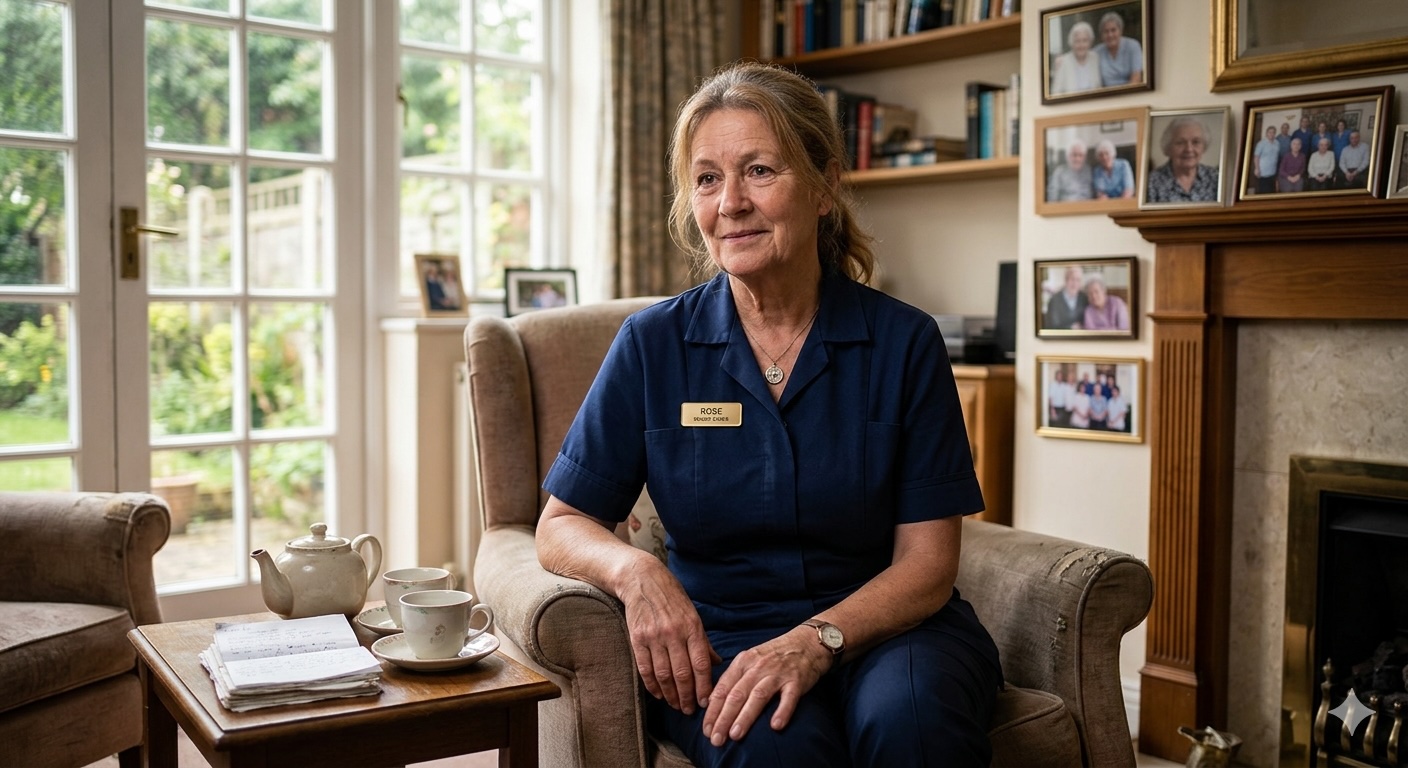
A Conversation with Rose: A Senior Carer with Over 25 Years of Compassion, Strength and Dedication

Sunshine Calero
Senior Care Consultant · UK home care editorial
Behind every experienced carer is a story — and for one of our senior carers, that story begins long before her professional career. With over 900,000 people living with dementia in the UK, experienced carers like Rose matter more than ever.
With over 20 years of experience in care, Rose has supported individuals living with dementia, complex and sometimes aggressive behaviours, and has worked closely with both adults and children. But her path into care is deeply personal, shaped by a lifetime of looking after others.
“I became a carer long before I had the job title.”
Q: What inspired you to become a carer?
“When I was 10 years old, my father passed away, and everything changed. I had to step up and help look after my family from a very young age.
At the time, I didn’t think of it as ‘care’; it was just what needed to be done. But looking back, that experience shaped who I am today. It taught me responsibility, patience, and how to put others first.
I later studied midwifery in the Philippines because I always knew I wanted to work in a role where I could care for people.”
A new chapter in the UK
Q: What happened when you moved to the UK?
“When I relocated to the UK, I began working as a nanny housekeeper. That was my job for 25 years — I supported families and cared for children from birth until they no longer required a nanny.
I still do it on a part-time basis to this day. The role taught me about patience, routines, emotional support, and how to build trust, especially with children. You become part of the family in many ways.
As I got older, I felt like I needed a new challenge, but I knew I still wanted to work in a caring role. Moving to the care sector felt very natural for me.”
“Care is about connection, not just tasks”
Q: What has your experience taught you over the years?
“Care is about the connection you build and not just the everyday tasks. Whether you are caring for a child or an older adult, people need to feel safe, respected, and understood.
Sometimes just sitting and talking, or being there for the person, is the most important part of the job.”
Supporting clients living with dementia
Q: You’ve worked extensively with people living with dementia — what’s important to understand as a carer?
“You really need a lot of patience and, more importantly, empathy. Dementia affects everyone differently, so you have to adapt to each individual.
You have to keep things calm and make sure their care is consistent — that is the key. Routine is extremely important, and so is treating each person with dignity at all times.”
“Behaviour is a form of communication”
Q: You’ve supported individuals with complex behaviours — how do you approach that?
“I’ve learned not to take it personally. Behaviour usually comes from fear, confusion, frustration, and feelings out of the client’s control.
Instead of reacting, I try to understand what the person is feeling and what they might need. Staying calm but firm and reassuring can help de-escalate situations. Experience teaches you to look beyond the behaviour.”
Working with children and families
Q: Does your background as a nanny help in your current role?
“Definitely. Working with children for so many years helped me develop emotional awareness and strong communication skills.
You learn how to read people, how to build trust, and how important consistency and structure is — all of which apply in care too.
It helps when supporting families because I understand the importance of feeling confident in the person caring for your loved one.”
The emotional side of care
Q: What do people often underestimate about being a carer?
“How much of yourself you give. You build strong relationships and you genuinely care about the people you support.
It can be emotional at times, especially during the palliative phase, but it is the most rewarding job you can do. Knowing you’ve improved the quality of someone’s life — or just made their day even 1% easier — means absolutely everything.”
Advice for families considering home care
Q: What would you say to families who are unsure about starting care?
“Take your time and don’t rush. It’s important to find the right person and the right support. Start small if you need to, and ask questions. Good care should feel natural, even with new challenges.”
“It’s more than a job — it’s part of who I am.”
From caring for her family at just 10 years old, studying midwifery, to spending decades across nannying and the care sector, Rose’s journey is one of resilience, compassion, and lifelong dedication to others.
Her experience across different stages of life allows her to bring a unique level of understanding and warmth to every person she supports.
At Match with Care, we’re proud to introduce carers whose skills are shaped not just by training — but by real life experience.
If you’d like to learn more about how we can support your family, please get in touch.
Frequently asked
questions
Beyond qualifications, families often need patience, calm under pressure, and the ability to build trust over time. Rose's 25 years span dementia, complex behaviours, and palliative support — continuity and temperament matter as much as task lists.
Ask about experience with your loved one's condition, how the carer handles difficult moments, what continuity looks like, and how communication with the family will work. Personality fit is not a nice-to-have — it affects daily safety and dignity.
Rose emphasises routine, calm tone, and understanding triggers rather than arguing with confusion. De-escalation and familiarity often work better than trying to correct someone in the moment.
Yes. Live-in care blends practical support with close companionship in someone's home. Good carers set boundaries, rest properly, and rely on clear agreements with families about duties and downtime.
Sources
5 sourcesNHS
View source“Dementia information and support”
2024
Alzheimer's Society
View source“Understanding dementia”
2024
NHS
View source“What end of life care involves”
2024
GOV.UK
View source“DBS checks”
2024
NHS
View source“Help at home from a paid carer”
2024